

News
Retrospection: Veganic farming in practice – Field trip to the “Biohof Hausmann”
As part of the agroecological module “Bodenfruchtbarkeit und Pflanzenernährung” (soil fertility and plant nutrition) within the Geoecology Master’s program at the University of Bayreuth, a field trip to the veganic (vegan-organic) farm “Biohof Hausmann” was offered this year for the second time. A retrospective view.
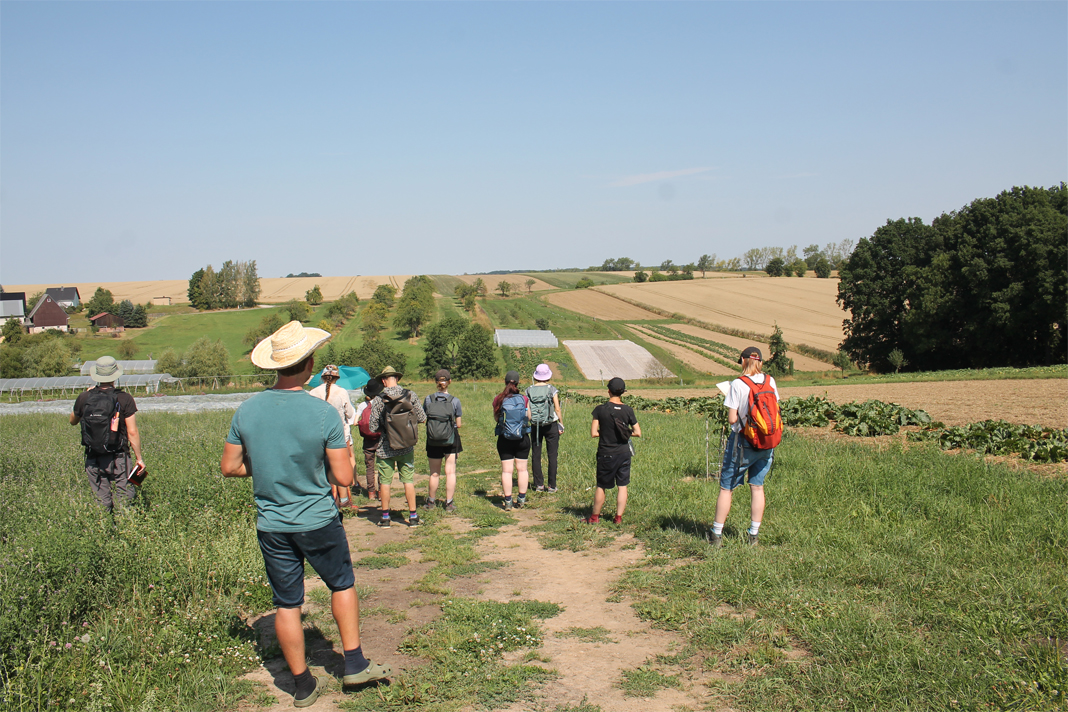
Farmer Daniel and participants of the field trip look across the farm - © Tom Zimmermann
The Biohof Hausmann is a family-run farm located in Breitenborn near Rochlitz, between Leipzig and Chemnitz. In 2012, Daniel Hausmann took over the farm – which at the time was still conventionally managed and included cattle farming – from his father Jens, while he was studying organic farming and marketing at Eberswalde University. Since 2014, the farm has been deliberately managed according to veganic principles and has held the “biocyclic-vegan” certification since 2023. This cultivation approach follows the principles and standards of organic farming but excludes all commercial livestock husbandry and uses no inputs of animal origin (no animal manure, no slaughterhouse wastes, etc.). The former cattle barn has been converted into a farm shop; additionally, vegetable boxes are distributed in Leipzig every week.
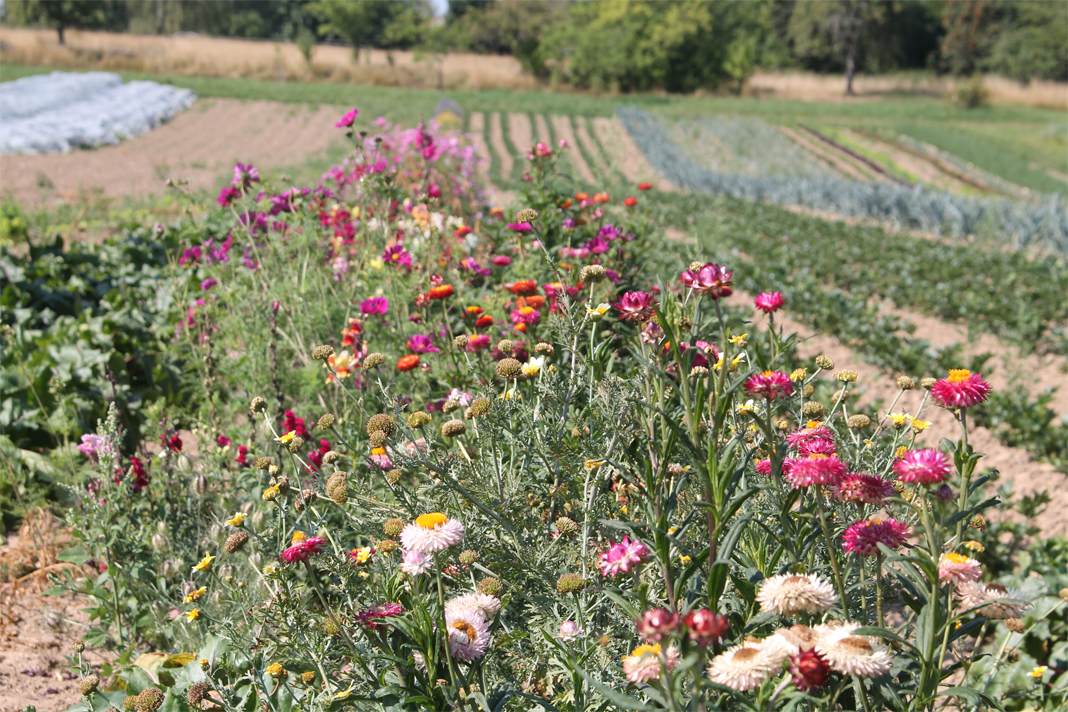
Colorful flowering strip in the vegetable field - © Tom Zimmermann
Daniel Hausmann and his team currently cultivate 65 hectares of land, comprising 5 ha of grassland, 56 ha of arable land, 1 ha of potatoes, and 3 ha of vegetables. The grassland is mowed twice a year, and the clippings are composted to recycle nutrients within the farm. Crops grown on the arable land include clover-grass, cereals (wheat, oats, rye, spelt, lupins), and various cover crops. Vegetable cultivation is highly diverse, with at least 60 different types of vegetables – and usually multiple varieties of each – grown on the site. The farm also features polytunnels and a meadow orchard. The “Biohof Hausmann” stands out as a model farm for sustainable food production and crop diversification. Particular emphasis is placed on fostering biodiversity and healthy soils, on closing nutrient cycles, and on actively building humus. This makes the farm highly interesting from an agroecological and scientific perspective – and makes a field trip there well worth the visit.
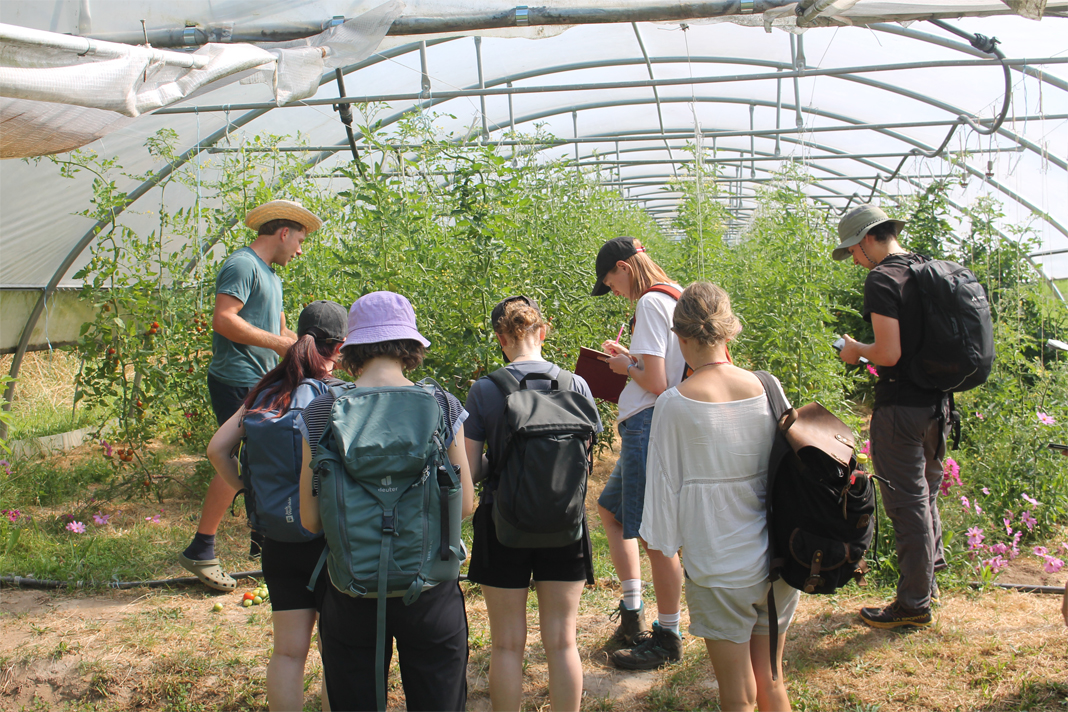
Students in front of the polytunnel for tomatoes - © Tom Zimmermann
Geoecology students from the University of Bayreuth had already visited Saxony’s first veganic farm in the summer of 2024. A second field trip now took place on August 3, 2026, to gain practical insights into veganic farming. Prior to this, the students had already explored the topic from a scientific perspective in lectures and during a seminar. Upon arrival at the farm, Daniel showed us the various fields, explained his cultivation methods focusing on veganic vegetable production, and answered numerous questions. The farm tour also incorporated topics covered in the seminar (e.g., crop rotation, soil tillage, cover crops and green manure). Aspects such as root growth and even a “scent test” of the farm's own clover-grass compost were also part of the tour. This allowed theory and practice to be effectively linked and discussed together.
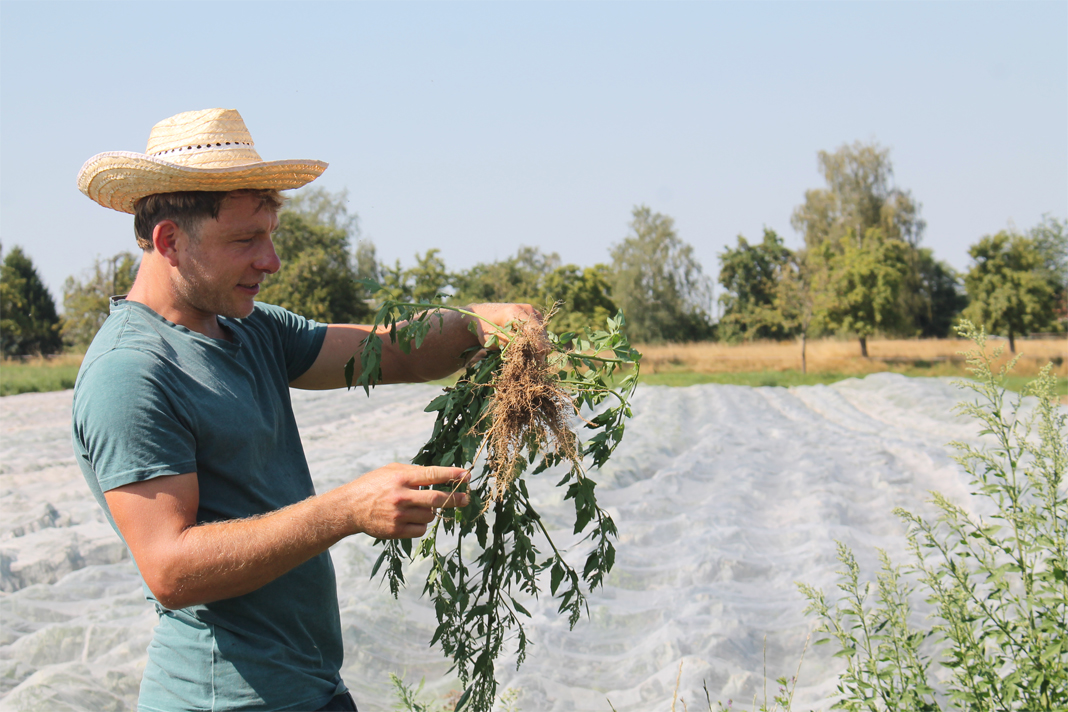
Farmer Daniel shows the root system of a plant - © Tom Zimmermann
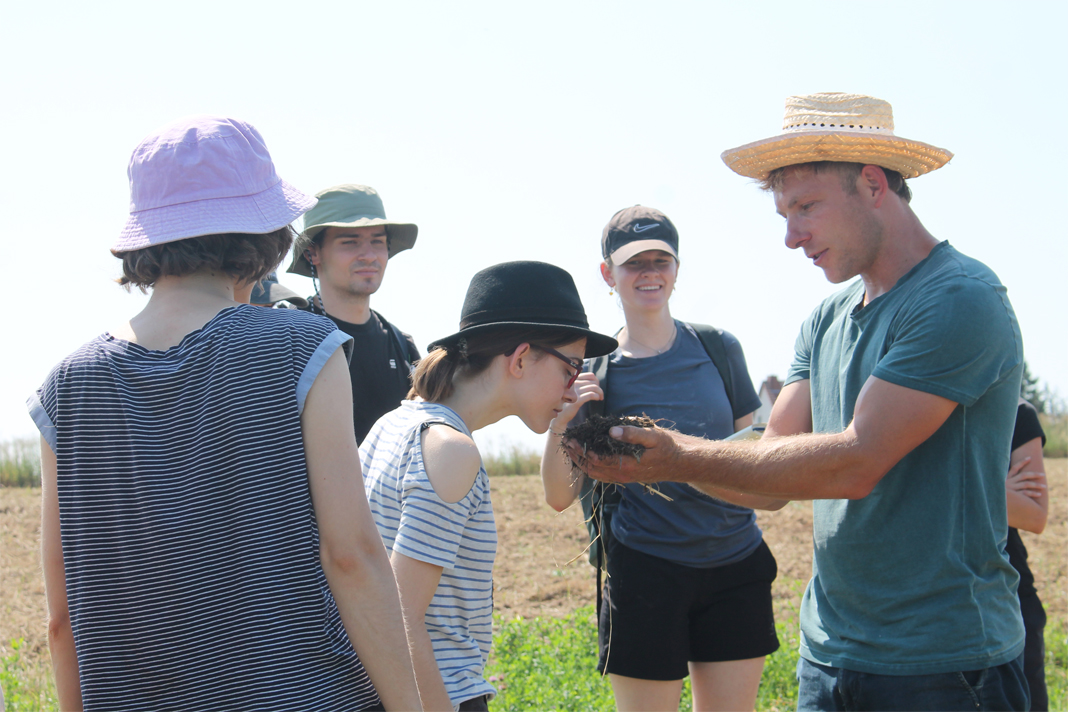
Students smell the farm's own clover-grass compost - © Tom Zimmermann
After a lunch break beneath pear and walnut trees, the group discussed potential research questions and locations for taking soil samples. Following the field trip, the collected samples were analyzed for parameters of soil fertility and plant nutrition during a lab exercise that was also part of the module. While students in the summer of 2024 investigated how the duration of veganic farming (comparing plots with 4, 7, or 10 years of veganic cultivation against neighboring conventional plots) affects soil fertility, even two research questions were addressed this year: one concerning the effects of compost and plastic versus living mulch on soil fertility, and another comparing clover strips, alfalfa-clover-grass mixtures, and permanent grassland. The students are currently assessing the lab results.
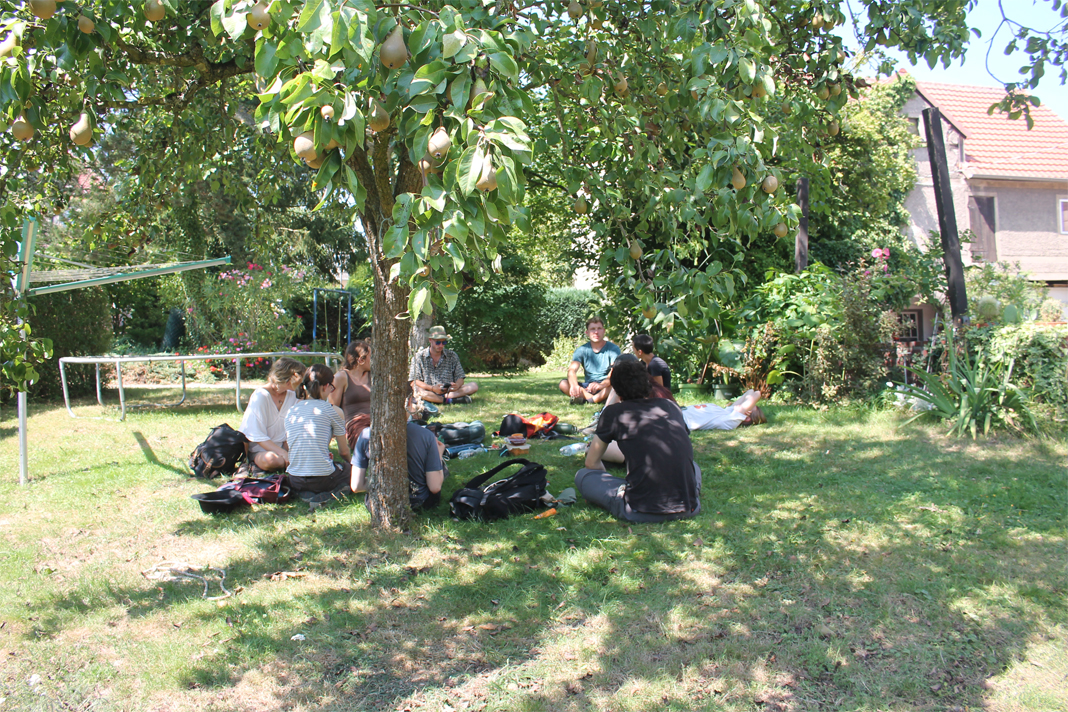
Group discussion after the lunch break - © Tom Zimmermann
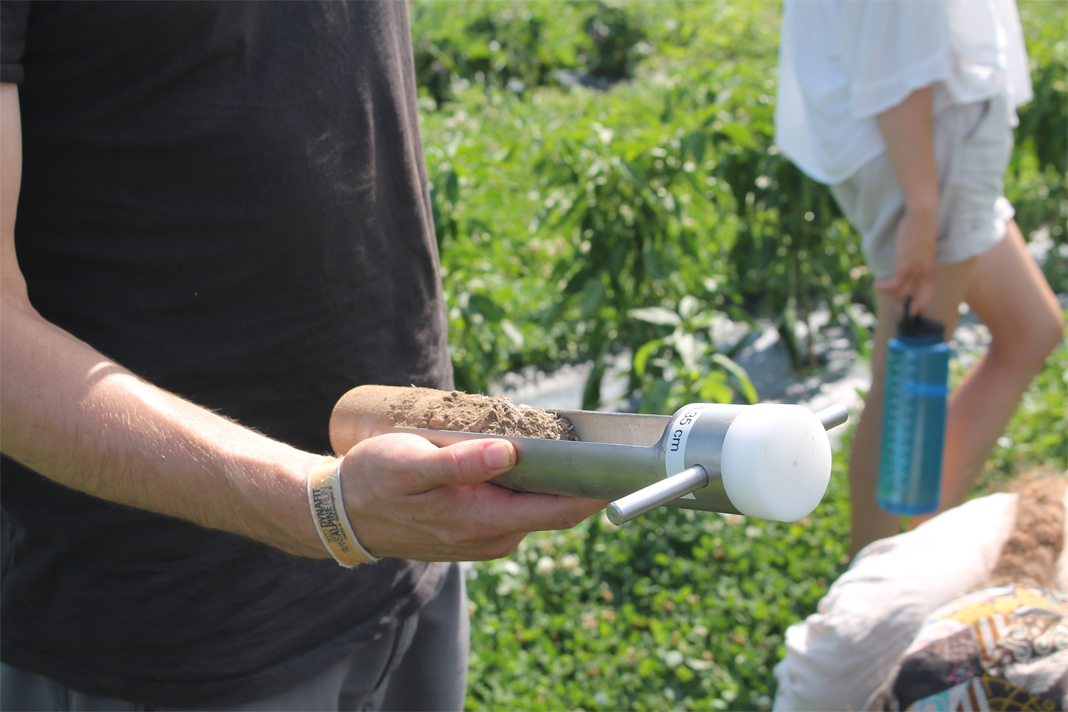
Soil corer with sample - © Tom Zimmermann
On a final note, I would like to express my sincere thanks to Daniel Hausmann for facilitating the field trip and soil sampling, and to Tom Zimmermann for the photographic documentation.
Text: Dr. Ulrike Schwerdtner | Photos: © Tom Zimmermann